 Blog
Blog
Bacteriostatic Water: The Small-Volume Sterility Workhorse Every UK Lab…
What bacteriostatic water is, how it works, and why it isn’t the same as sterile water
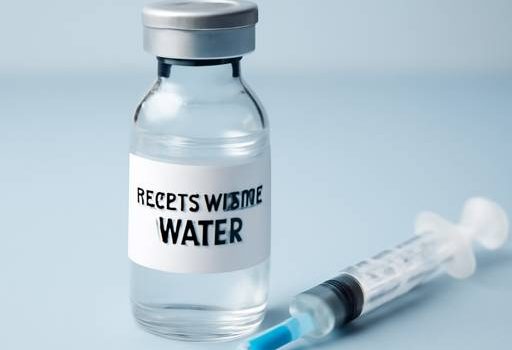
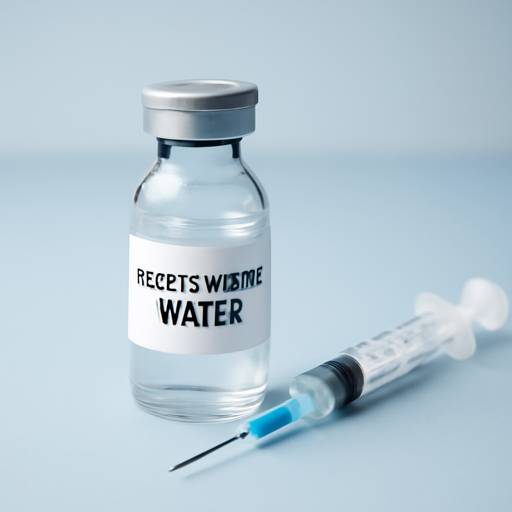
Bacteriostatic water is a simple but highly specialized reagent: water for injection-grade purity combined with a low concentration of a preservative, most commonly 0.9% benzyl alcohol. The benzyl alcohol does not “kill” microorganisms outright in typical use; rather, it makes the environment unfriendly for microbial proliferation. In microbiology terms, that’s bacteriostatic, not bactericidal. This distinction matters for research workflows that need to maintain small-volume sterility across multiple entries into a single container, such as repeated withdrawals from a multi-dose vial when making or topping up stock solutions. By limiting the ability of contaminant microbes to multiply, the solution helps preserve integrity between draws when used under good aseptic technique.
Because it is water with a preservative—and not an electrolyte solution—it is not isotonic. That makes it chemically different to normal saline or phosphate buffers, and functionally different from plain sterile water as well. Sterile water contains no preservative and is meant for single-use; once a sterile water container is breached, any unused portion is typically discarded immediately to avoid contamination risk. With bacteriostatic water, the benzyl alcohol is the key to enabling repeated access within a manufacturer-specified window after first puncture, often quoted in product literature as up to 28 days, provided storage and handling instructions are followed in the lab. The actual allowable timeframe is product-specific, so always check the container label and certificate of analysis (COA).
Chemically, benzyl alcohol is an aromatic alcohol that can disrupt microbial membrane function. At the low concentration used here, it acts as a preservative without appreciably altering water’s role as a diluent for many small molecules and some peptides. That said, its presence may matter for certain experimental contexts. For example, benzyl alcohol absorbs in the UV range (notably around 254 nm), which can interfere with detection in some HPLC/UV workflows if not properly accounted for. It can also interact with delicate protein structures, affecting conformation or activity in sensitive assays. When precision is paramount, researchers evaluate whether the preservative’s benefits outweigh these potential analytical side effects.
In the UK, labs commonly procure bacteriostatic water as a research reagent, checking documentation that confirms purity, identity, and microbial quality. Authenticity, traceability, and clear “research use only” labeling are essential—particularly in regulated or institutional environments—so practitioners can maintain compliant documentation and consistent experimental outcomes.
When to use (and when not to use) bacteriostatic water in research workflows
The core value of bacteriostatic preservation is its support for multi-use scenarios where you need repeated, small withdrawals without compromising sterility between uses. Typical examples in UK research settings include preparing and refreshing stocks of certain small molecules for screening campaigns, making aliquots of lyophilized reagents for analytical method development, or maintaining a frequently accessed diluent for day-to-day bench work under a laminar flow hood. In these cases, the combination of water-for-injection purity and preservative helps maintain consistency, reduce waste, and mitigate the risks that come with repeatedly opening single-use containers.
However, the presence of benzyl alcohol means there are equally clear cases where bacteriostatic water is not advisable. In mammalian cell culture, for instance, benzyl alcohol can be cytotoxic; even trace carryover into culture media may confound viability readouts, alter cell behavior, or produce spurious results in toxicity assays. For protein chemistry, sensitive enzymes and certain higher-order protein structures may be destabilized by aromatic alcohols, making preservative-free sterile water or a defined buffer the safer choice. Analytical chemists should also consider that benzyl alcohol’s UV absorbance can overlap with common detection wavelengths; similarly, in mass spectrometry or LC-MS workflows, non-volatile components and extraneous organics can complicate spectra and suppress ionization, so a pure solvent system (or different diluent) is often preferred.
In formulations or biophysical studies where ionic strength, pH, or osmolality are critical variables, sterile saline, PBS, or carefully prepared buffers may be functionally superior to water. Remember that bacteriostatic water is not isotonic; it contributes negligible ionic content and therefore may not mimic physiological or assay-specific conditions. If you are testing peptide solubility across a pH gradient, or benchmarking stability in salt-containing matrices, you’ll typically select a buffer system rather than a preservative-containing water to ensure reproducibility and relevance to your target application.
To make this concrete, consider two contrasting lab scenarios. In a screening lab performing solubility checks on new small-molecule analogs, a single multi-dose vial of bacteriostatic water can be accessed repeatedly across a week’s worth of plates under aseptic technique, saving time and reducing consumables waste. In contrast, a structural biology group measuring enzyme kinetics at 280 nm would likely avoid any diluent with benzyl alcohol because of UV absorbance and potential protein interaction effects. In other words, the decision is less about whether bacteriostatic water is “good or bad,” and more about fit-for-purpose selection: weigh contamination control versus chemical and analytical compatibility in the context of your specific assay.
Quality, handling, and compliance considerations for UK labs
For UK researchers, the most important factor in working with bacteriostatic water is provenance. Source from UK-registered suppliers that provide robust documentation, ideally including independent third-party verification of purity and identity, plus batch-level COAs that specify microbial and endotoxin limits. If the reagent is designated research use only, ensure this is clearly indicated on the label and accompanying paperwork; this supports internal compliance, procurement audits, and alignment with institutional governance. Strong suppliers will also maintain rigorous storage and logistics controls, such as temperature monitoring and sealed, tamper-evident packaging, to safeguard product integrity from dispatch to delivery.
On the bench, treat bacteriostatic water as a sterile reagent that still relies on your technique to stay that way. Use appropriate aseptic practices: disinfect vial stoppers before piercing, use sterile syringes or pipette tips for each entry, and minimize the number of punctures. Store according to the manufacturer’s label—typically at controlled room temperature and away from direct light—and track the “first puncture” date. Manufacturers often indicate an allowable reuse window (commonly up to 28 days) during which the preservative can help mitigate microbial growth, provided handling is appropriate. Replace vials promptly if integrity is compromised, and never use the reagent if clarity changes or if particulate matter is visible.
Analytically, validate that benzyl alcohol will not interfere with your readouts. For HPLC-UV methods, account for baseline contributions at relevant wavelengths or run matched blanks. For LC-MS assays, ensure your sample preparation removes non-volatile components or, when feasible, substitute a more MS-friendly solvent for final analysis. For peptide or protein work, evaluate any preservative-related folding or activity effects during method development. Labs conducting endotoxin-sensitive assays should confirm suitable specifications on the COA, remembering that sterility and low endotoxin are related but distinct quality attributes.
Finally, keep compliance front and center. In the UK, reputable research suppliers explicitly state that reagents like bacteriostatic water are not for human or veterinary use, and they will refuse orders suggesting clinical or personal administration. This clarity protects researchers and institutions, and it aligns with the expectations of ethics committees, biosafety officers, and quality managers. Build simple SOPs that cover acceptance checks (matching lot numbers with COAs), storage records, first-puncture logging, and disposal. Many UK labs also prefer suppliers able to support institutional procurement needs—such as next-day tracked dispatch, reliable batch continuity, and comprehensive testing panels—because these operational details reduce downtime, support reproducibility, and improve the overall integrity of the research pipeline.
In practice, the labs that get the most from bacteriostatic water are those that pair the reagent’s strengths—multi-use convenience and contamination control—with method-aware caution. By selecting it only when its preservative profile is analytically compatible, and by sourcing from suppliers that provide full transparency on quality and handling, UK researchers can streamline routine tasks without compromising data or compliance. Whether you’re supporting high-throughput screening, reconstituting lyophilized research materials for repeated bench work, or maintaining a sterile diluent for day-to-day assays, deliberate reagent choice and disciplined documentation will keep your results robust and your audit trail clean.

Mexico City urban planner residing in Tallinn for the e-governance scene. Helio writes on smart-city sensors, Baltic folklore, and salsa vinyl archaeology. He hosts rooftop DJ sets powered entirely by solar panels.
