 Blog
Blog
From Sketch to Spotlight: Why a Jewellery Content Creation Tool Is the New Studio
What a Jewellery Content Creation Tool Does—and Why It Matters Now
In luxury and fashion, beautiful images are not just decoration; they are the language of commerce. A modern jewellery content creation tool replaces costly, time-consuming studio shoots with a nimble, software-driven workflow that takes pieces from concept to campaign in hours, not weeks. It turns sketches, CAD models, or standard product photos into studio-grade visuals, allowing brands to build consistent, scalable content libraries for ecommerce, social, and print without compromising on craft. For artisans, independent ateliers, and growing labels, the shift reclaims both budget and creative control.
Traditional photoshoots demand coordination: booking photographers, stylists, models, locations, and retouching time—each step a potential bottleneck. A purpose-built platform streamlines all of this into a drag-and-drop workspace with intelligent lighting, material realism, and backgrounds that match brand guidelines. Metals render with the crisp reflections clients expect of fine jewellery, gemstones exhibit dispersion and depth, and shadows anchor products naturally. The result is studio-quality visuals in 2K and 4K that can be repurposed across lookbooks, PDPs, and ads.
The biggest win is consistency at scale. Every product variation—yellow gold, rose gold, platinum; pavé or solitaire—can be generated in uniform angles and lighting, making collection pages look cohesive and premium. Detailed packshots elevate product pages, while on-model frames and lifestyle scenes deliver story and scale. Smart editing tools accelerate retouching, from dust and micro-scratch cleanup to precise color adjustments that preserve metal tones and gemstone fire.
Speed translates directly into commercial impact. Launch calendars are notoriously volatile: stone availability changes, preorder windows shift, collaborations go live with little notice. A dedicated Jewellery content creation tool lets teams update imagery as the assortment evolves, test new art directions for ads, and adapt visuals to local seasons and cultural cues—from London to Dubai to New York—without reshooting. When a product sells out or a retailer requests a specific background, assets can be regenerated in minutes.
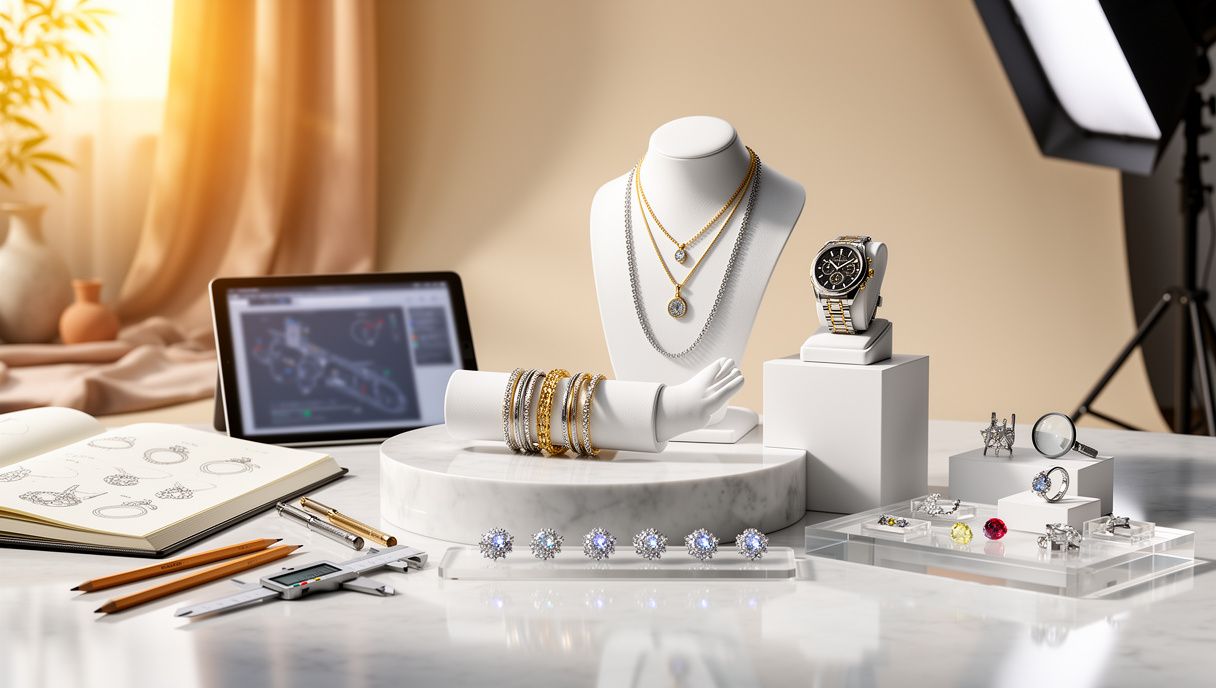
Key Features to Prioritize—and How They Fit Real-World Workflows
Choosing the right platform comes down to realism, control, and throughput. Start with rendering fidelity. Fine jewellery demands accurate reflections, subtle shadow gradients, and true-to-life gemstone behavior. Look for material controls that simulate metal polish levels, prong geometry, and the microfacets that define diamond scintillation. Without that, even beautiful art direction can fall flat. A strong jewellery content creation tool should maintain authentic detail from CAD or high-res source images into the final output, ensuring every bevel and hallmark remains visible.
Next, consider the studio itself. Drag-and-drop scenes, adjustable lights, and interchangeable backgrounds form the backbone of efficient content production. Built-in templates for packshots, on-model imagery, and lifestyle campaigns reduce setup time and create repeatability. Scene presets for common angles—straight-on, 45°, macro detail, clasp views—help merchandising teams produce the exact frames retailers expect, while batch processing speeds up variant creation and colorway swaps.
Workflow-friendly export is critical. Ecommerce requires transparent PNGs or clean white backgrounds; social calls for vertical crops; print needs 2K and 4K with reliable color. The ability to generate multi-aspect outputs at once cuts manual work and minimizes mistakes. Metadata-aware exports that support naming conventions also keep digital asset libraries organized. When teams can attach alt text and captions early, SEO improves and accessibility becomes part of the standard process rather than an afterthought.
Real-world scenarios make these features tangible. A bespoke atelier in London can turn a CAD of an engagement ring into a suite of images: luminous packshots for PDPs, soft lifestyle frames for Instagram, and hero banners for a seasonal landing page. A microbrand launching a diver’s watch might simulate on-wrist shots, recreate a moody maritime set, and test different strap colorways before samples arrive. A multi-brand retailer can standardize presentation across hundreds of SKUs sourced from different designers, ensuring every product meets marketplace requirements without last-minute reshoots. All of this happens in a single, centralized studio, reducing back-and-forth between creative, merchandising, and growth teams.
Finally, look for collaboration tools. Commenting, versioning, and shareable previews shorten approvals and keep launches on track. When stakeholders can annotate a reflection, request a warmer gold tone, or ask for a tighter crop directly in the tool, feedback loops shrink from days to hours. That agility keeps campaigns moving and empowers teams to iterate on concepts quickly while staying faithful to the brand’s visual DNA.
Strategies to Maximize ROI: From PDP Excellence to Campaign Agility
Great tools are only half the equation; the other half is a deliberate content strategy. Start at the product page, where conversion happens. Build a consistent PDP stack: a hero packshot on white, front and angled views, macro detail of settings, scale indicators, and an on-skin image that communicates size and wearability. This mix satisfies shopper intent—from quick scrollers to meticulous researchers—and reduces returns by setting accurate expectations. Use scene presets to replicate this set for every SKU so the catalog looks cohesive and premium.
Plan for omnichannel from the outset. For social, design vertical-first assets with negative space for copy overlays; for paid ads, create multiple crops to test performance; for email, lighter backgrounds keep file sizes lean. Maintain a library of lifestyle environments that align with seasonal themes—spring florals, coastal summer, winter velvet—so creative refreshes are swift. In markets like the UK, EU, US, and the Middle East, localize backgrounds and model casting to resonate with regional aesthetics while keeping product rendering consistent.
Adopt an experimentation mindset. Use your jewellery content creation tool to A/B test art direction without production delays: soft morning light versus dramatic chiaroscuro; model hand pose variations; reflective marble versus matte plaster. Track metrics like click-through, add-to-cart rate, and save-to-wishlist by creative variant. Over time, patterns emerge—perhaps macro gemstone shots drive initial clicks, while on-skin frames lift final conversion. Feed these insights back into your scene templates so each release gets smarter.
Streamline the asset pipeline. Establish naming rules that encode SKU, angle, background, and crop in the filename. Assign alt text that includes material, gemstone, and style terms to support organic search. Store master 4K files alongside ready-to-deploy web crops and print variants. For wholesale partners and marketplaces, generate retailer-specific packs with approved backgrounds and dimensions to prevent compliance issues. A simple QA checklist—dust removal, color verification against physical samples, metal tone accuracy, consistent shadow direction—keeps quality high as volume grows.
Consider the broader business impact. Faster content creation shortens time-to-market for limited drops and customization programs. Designers can validate ideas visually before sampling, reducing waste and prototype costs. Sustainability gains follow: fewer physical shoots mean lower travel, shipping, and set waste. When urgent changes hit—like price updates, packaging tweaks, or gemstone substitutions—assets can be regenerated in minutes, keeping product pages and ads aligned without emergency studio bookings. Brands that operate across boutiques and pop-ups can spin up location-specific visuals for store openings, trunk shows, and VIP events, ensuring every touchpoint feels intentional and premium.
Above all, make the tool a shared creative space. Invite merchandising to mark required angles, let brand teams lock color profiles, and empower growth marketers to request ad variants on the fly. The combination of realistic rendering, reusable scene systems, and collaborative feedback transforms content creation from a bottleneck into a competitive advantage, letting every piece—from a handcrafted pendant to a complex chronograph—shine exactly as intended across ecommerce, social, and print.

Mexico City urban planner residing in Tallinn for the e-governance scene. Helio writes on smart-city sensors, Baltic folklore, and salsa vinyl archaeology. He hosts rooftop DJ sets powered entirely by solar panels.
